
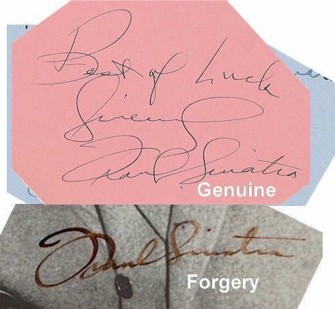
19 May THE PROLIFERATION OF FAKE AUTOGRAPHS AND THE IMPORTANT OF AUTHENTICITY
The Counterfeit Epidemic in the Celebrity Autograph Market
The autograph market is booming, with signed memorabilia from celebrities, athletes, and historical figures selling for extraordinary sums. But where demand and money surge, fraud follows—and the flood of counterfeit autographs has become impossible to ignore
I have some familiarity with the autograph market from my years both as an investor in a sports memorabilia and baseball card store and as a longtime hobbyist collector. Based on that experience, I can say with confidence that the autograph industry is saturated with forgeries. Counterfeit signatures routinely appear in retail stores, at memorabilia shows, and across online marketplaces such as eBay, Whatnot, and Facebook Marketplace.
Autographs purportedly signed by legendary figures such as Michael Jordan, Babe Ruth, Joe DiMaggio, Ted Williams, The Beatles, Marilyn Monroe, and John F. Kennedy are among the most commonly forged items in the hobby. Their legitimate signatures are also some of the most valuable, which explains why they are often counterfeited. Personally, I would never consider purchasing an autographed item unless I was fully confident in both its authenticity and provenance.
Why So Many Autographs Are Fake
One of the hobby’s most respected authentication firms, James Spence Authentication (JSA), has estimated that as many as 95 percent of all Michael Jordan autographs currently in circulation are counterfeit.1 That figure may sound astonishing, but it reflects a simple reality: there are not enough hours in the day for Jordan to have signed the enormous volume of memorabilia now available on the market.
The FBI has estimated that “50-70% of signed sports memorabilia has fake signatures.” 2 But this does not seem to have decreased the size of the market. People are still buying the fakes!
Some counterfeit signatures are crude and immediately recognizable as fake. Others are sophisticated reproductions capable of deceiving even experienced collectors.
A Personal Lesson in Authentication
I encountered this problem firsthand years ago when I obtained what I believed to be a genuine autograph from Joe DiMaggio through the mail, only to later discover that the signature had actually been signed by his sister, Marie, as many had. Experiences like that demonstrate how even seasoned collectors can be misled.
The Limits of Certificates of Authenticity
For years, collectors relied heavily on holograms and certificates issued by respected authentication companies such as Professional Sports Authenticator (PSA), James Spence Authentication (JSA), Upper Deck Authenticated (UDA), Fanatics Authentic, and Beckett Authentication Services.
Unfortunately, counterfeiters have become increasingly sophisticated. Today, forgers not only manufacture fake holograms but also duplicate legitimate certification numbers to deceive buyers. In some cases, a single authentic certification code may appear on hundreds of counterfeit items across the internet.
Professional authenticators generally compare signatures against known exemplars before issuing a certificate of authenticity (COA). However, not all COAs carry equal credibility. I have personally seen obvious forgeries accompanied by certificates issued by local memorabilia shops or obscure authentication companies. A COA alone should never be viewed as conclusive proof of authenticity. There are also fake authenticators or forensic experts!
Example of a worthless Joe DiMaggio COA
What Helps Establish Authenticity?
Evidence that may help support an autograph’s authenticity includes:
- Photographs or videos of the signing event, even if they do not show the exact item being signed
- Receipts or invoices from reputable dealers or major auction houses
- Witnessed-signature authentication from respected companies such as PSA, JSA, or Beckett
- Event documentation and chain-of-custody records
- Provenance or documented history tracing the item back to the original owner or signing event
Generally speaking, autographs with strong provenance are both more trustworthy and more valuable.
Common Warning Signs of Counterfeit Autographs
Collectors should also recognize the warning signs frequently associated with forged memorabilia, including:
- Prices that seem unrealistically low, such as a “signed” Babe Ruth baseball offered for only a few hundred dollars
- Sellers offering large quantities of identical signatures
- Generic or vague certificates of authenticity
- Sellers unwilling or unable to provide provenance
- Vintage items that appear unusually pristine
- Be aware of machine signatures
- Signatures from celebrities who rarely signed autographs, including Shoeless Joe Jackson, Christy Mathewson, Bill Russell, Steve Jobs, Josh Gibson, or Joe DiMaggio on memorabilia associated with Marilyn Monroe
- Historical documents lacking a verifiable chain of custody
Best Practices for Collectors and Investors
For collectors and investors, several best practices can significantly reduce the risk of purchasing counterfeit material:
- Buy only from established, reputable dealers or major auction houses
- Favor witnessed-authentication programs, such as Beckett Verified Signature
- Request detailed provenance and supporting documentation
- Compare asking prices against established market values
- Exercise caution when purchasing through online marketplaces that offer limited buyer protections
Due Diligence Is Essential
The unfortunate reality is that a substantial percentage of autographed memorabilia currently offered online and in stores is likely counterfeit. While reputable authenticators and trustworthy dealers can reduce the risk, collectors should approach the hobby with careful research, skepticism, and patience.
In the autograph market, due diligence is not optional — it is essential.