
22 Jun AUTONOMOUS AUTOMBILES – WHY?
Waymo and Autonomous Vehicles: Technology in Search of a Problem?
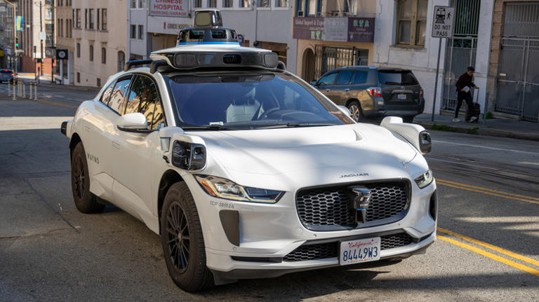
We recently visited San Francisco and were amazed by the prevalence of Waymo autonomous vehicles throughout the downtown area. For those unfamiliar with them, Waymo operates self-driving robotaxis that transport passengers 24 hours a day without a human driver behind the wheel. The company describes itself as “the world’s first autonomous ride-hailing service.”
Waymo, owned by Alphabet (Google), has developed undeniably impressive technology. Watching these vehicles navigate busy city streets is fascinating. They obey traffic laws, maneuver smoothly through traffic, and appear to handle complex driving situations with remarkable precision. According to the company, Waymo vehicles have autonomously driven more than 25 million miles on public roads across more than 13 U.S. states and now operate on the company’s sixth-generation autonomous driving system.
Waymo is not alone in the autonomous vehicle race. Tesla, Ford, and Kia have introduced various forms of self-driving technology, while BMW has developed vehicles capable of parking themselves. Other companies pursuing autonomous driving capabilities include Uber, Rivian, Lucid, Nuro, Ouster, NVIDIA, Amazon, Stradvision, Volvo, Aptiv, Innoviz, TIER IV, Sony, Isuzu, AiMotive, Bitsensing, Zoox, May Mobility, and Motional.
Waymo’s Mission
Waymo states that its mission is to make transportation safer, more efficient, and more accessible. In many respects, the company appears to be making meaningful progress toward those goals. It also reports that its vehicles experience 88% fewer injury-causing or more severe crashes than those driven by humans.
Industry analysts have noted that Waymo’s strength lies in its mature ecosystem, extensive real-world testing, regulatory approvals, and focus on user experience. Features such as music selection, lost-item alerts, and partnerships across multiple cities have helped establish it as the benchmark for robotaxi services. However, the high estimated vehicle costs remain a significant obstacle to widespread deployment.
Waymo also emphasizes that it is “working to make roads safer, not because humans aren’t enough, but because to us, they’re everything.”
While that mission is admirable, I cannot help but ask whether safety is the primary motivation behind these vehicles or whether they also serve as a highly visible demonstration of what artificial intelligence and autonomous technology can achieve.
At times, Waymo feels like technology in search of a problem.
Does society truly need fully autonomous robotaxis? Are they substantially more convenient or useful than existing transportation options, or are they simply a sophisticated technological novelty?
The real objective?
What is the real objective of autonomous vehicles?
Is the goal to reduce labor costs by replacing taxi and rideshare drivers? The economics are not obvious and do not favor the investment in Waymo. In 2023, the average taxi driver earned $35,120 in wages, while the average Uber driver earned about $29 per hour in 2025, or roughly $60,000 per year before insurance and fuel expenses.
By contrast, building and deploying a fully equipped Waymo vehicle can cost an estimated $200,000 to $300,000, including $50,000 to $70,000 for the vehicle itself, $100,000 to $150,000 for Lidar sensors, and $50,000 to $80,000 for onboard computers. Software development adds still more expense. And there is annual upkeep and maintenance on the vehicle, plus software updates. On that basis, cost savings alone do not appear to explain the push toward autonomous vehicles.
Is it to eliminate interactions with talkative drivers or overcome language barriers when drivers often do not speak English? In effect, are we replacing thousands of low-wage transportation workers with sophisticated arrays of computers, cameras, sensors, and software developed in places such as Mountain View, California, and engineering centers around the world?
To me, Waymo represents one of the first major commercial applications of artificial intelligence operating independently in the physical world. Its onboard computers continuously make decisions without human intervention. They plan routes, interpret surroundings, respond instantly to changing traffic conditions, recognize signals and pedestrians, and safely navigate unpredictable situations.
Waymo is an experiment in AI
In that sense, these vehicles are more than just transportation—they are large-scale experiments in practical artificial intelligence.
Moreover, the technologies developed for fully autonomous vehicles could have applications far beyond robotaxis. Collision avoidance systems, object recognition, emergency braking, and other safety innovations may ultimately benefit conventional automobiles as well.
There are also compelling societal benefits. Autonomous vehicles can provide increased mobility and independence for individuals with disabilities or others who are unable to drive themselves. Waymo has also incorporated voice-command capabilities to improve accessibility.
Perhaps self-driving cars are merely the first step toward an even more autonomous future. They could eventually serve as the technological foundation for flying vehicles or provide valuable insights for robotic exploration of other planets.
For now, I remain both impressed and skeptical.
Waymo’s engineering achievement is extraordinary, and the potential safety benefits are significant. Yet I still wonder whether robotaxis represent a transformational solution to an urgent societal need or simply another example of technology advancing because it can.
Time—and widespread public adoption—will ultimately answer that question.