
22 Jun The Future of Jewish America: Responding to Rising Antisemitism and Changing Attitudes Toward Israel
Recently, my family attended a graduation ceremony for the College of Arts and Sciences at the University of San Francisco. What I witnessed left a lasting and alarming impression—not because of the graduation itself, but because it reflected broader generational and political changes taking place throughout America.
At the beginning of the ceremony, the audience stood to sing “The Star-Spangled Banner.” Seated in front of us was a Muslim family celebrating the graduation of a daughter. While most attendees stood, members of that family remained seated. Their lack of patriotism was apparent.
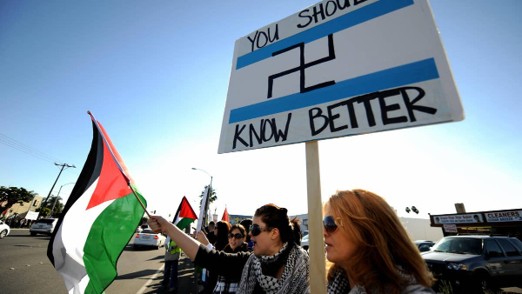
During the ceremony, one graduate draped a Palestinian flag over her gown. When she crossed the stage, she held up the flag and shouted, “Free Palestine!” This didn’t surprise me, but the response from the audience did. The statement was met with enthusiastic applause from most of the students in attendance, which I estimate was in the thousands.
A similar display recently occurred at the Stanford University graduation ceremony, where over 100 students walked out and chanted “Free Palestine” when Google CEO Sundar Pichai began delivering his address. I am sure it has happened at other campuses as well.
Diaspora Jews have been largely unresponsive to such incidents. Is that the best way to deal with these incidents of overt antisemitism and anti-Zionism?
Many Jewish Americans today are observing two significant and interconnected developments:
- There has been a rise in antisemitic incidents in the United States and around the world.
- A shift in attitudes toward Israel, particularly among younger Americans, including many young Jews.
These trends have created growing concern within the Jewish community. Increasingly, Jews report feeling less comfortable expressing their identity openly on campuses, in public settings, and online.
Antisemitism is a form of bigotry. It is deeply rooted and not a disease that can be cured with medication. While prejudice against many ethnic and religious groups is widely condemned, hostility toward Jews is too often dismissed, minimized, or overlooked. Although it was especially visible in the 1930s and 1940s—including in the United States—and less openly expressed for much of the period from the 1950s through 2023, it has reemerged in public view with disturbing intensity.
This essay examines these developments, evaluates different responses within the Jewish community, and proposes a strategy for strengthening Jewish life and security in America.
________________________________________
Part I: The Current Environment
Rising Antisemitism at Home
Antisemitism remains one of the world’s oldest forms of prejudice, going back over one thousand years. Although public expressions of anti-Jewish hostility diminished in many Western countries after World War II, recent years have seen a resurgence.
According to reports from Jewish organizations and monitoring groups, incidents involving harassment, vandalism, threats, and violence have risen significantly.
At the same time, antisemitism in modern America has reached levels many experts consider historically high. Jewish communities reported over 6,000 incidents involving harassment, vandalism, and violence in the U.S. in 2025, according to the ADL.
For example, in October 2018, a truck driver motivated by hatred of Jews was convicted of entering a Pittsburgh synagogue and murdering 11 worshippers. In March 2026, a man drove a truck filled with explosives into a Michigan synagogue, allegedly intending to kill 140 young Jewish Americans before being stopped. A pro-Israel rally in Boulder, CO, in June 2025, was interrupted when a pro-Palestinian man threw a firebomb into the crowd.
These developments have caused many Jewish Americans to question whether their long-term security can be taken for granted.
Jewish Americans should not feel unsafe expressing their identity, participating in public life, or supporting Israel. Yet for many, that sense of security is weakening. Many synagogues now employ armed security guards. And no government, outside Israel, will ever prioritize Jewish survival or comfort.
________________________________________
October 7 and Its Aftermath
The Hamas attacks of October 7, 2023, marked a turning point.
More than 1,200 Israelis were brutally murdered by Hamas, and over 250 hostages were taken during the attacks. While the attacks were widely condemned initially, public discussion quickly shifted toward debates about Israel’s military response and the broader Israeli-Palestinian conflict.
Effects in the United States
Yet in the weeks that followed, public discourse shifted rapidly, fueling a surge in anti-Jewish hostility. Later, we found that this was well organized in advance. As Israel responded militarily by invading Gaza to eliminate Hamas, global and domestic conversations became more polarized. Attention is increasingly focused on competing narratives, humanitarian concerns, and differing interpretations of the conflict.
The aftermath produced:
- Increased polarization
- Pro-Palestinian protests spread across campuses.
- Growing tensions involving Jewish students
- Intense anti-Israel social media campaigns promoted by Islamists
- Renewed debates about Zionism and Israel
Many Jewish Americans reported feeling isolated or reluctant to express their views publicly.
________________________________________
Part II: Sources of Concern
Campus Climate
Jewish students and professors reported increasing hostility and bullying at some universities.
Concerns include:
- Harassment and intimidation
- Encampments and demonstrations
- Faculty support for anti-Israel activism
- Institutional responses viewed by critics as inadequate
Several organizations have issued reports documenting these concerns.
During a House hearing on campus antisemitism, Congresswoman Elise Stefanik questioned the presidents of Harvard, MIT, and Penn about their institutions’ handling of student safety. Asked whether calls for the genocide of Jews violated campus conduct codes, the presidents said the answer depended on the “context.” The Trump administration later sued several universities, including Harvard, Northwestern, and UCLA, alleging they failed to protect Jewish students during pro-Hamas demonstrations
________________________________________
Social Media and Information Warfare
Social media platforms increasingly shape public understanding of the Middle East conflict. They are the primary news source for and greatly influence Millennials and Gen Y’ers.
Key challenges include:
- Viral misinformation
- Emotionally driven content
- Limited historical context
- Algorithmic amplification of extreme views
Many observers argue that pro-Israel voices have been less effective in competing within these environments.
________________________________________
Political Polarization
Debates surrounding Israel increasingly intersect with broader political divisions.
Examples include:
Progressive criticism of Israel
A number of current progressive political candidates and commentators have expressed openly antisemitic views, something that has been rare in the United States. Examples include New York City Mayor Zohran Mandami; Senate candidates Abdul El-Sayed (MI) and Graham Platner (ME); and congressional candidates Maureen Galindo (TX), Dan Bilzerian (FL), and Thomas Massie (KY). Adam Hamawy, a candidate who previously volunteered with an al-Qaeda-linked group, won the NJ Democratic primary for a seat in the U.S. House of Representatives.
Don J. Grundmann, an independent candidate for Governor of CA, has posted conspiracy theories linking Israel to the murder of conservative activist Charlie Kirk, and to the Sept. 11, 2001, terrorist attack.
Online influencer Hasan Piker has stated that Israel doesn’t have a right to exist, has praised the October 7 murders by Hamas, declared that America deserved 9/11, named Hezbollah’s flag as his favorite flag, claimed Hamas is a thousand times better than Israel, and compared a Houthi terrorist to Anne Frank.
Galindo, who was a serious candidate, said she would lock up American Zionists in ICE facilities and castrate pedophiles, which would be most Zionists. Listing all of Mandami’s antisemitic comments and appointments would take pages. According to a Quinnipiac poll, Mandami received support from 64% of young Jewish voters!
Right-wing isolationist opposition to U.S.-Israel cooperation – Commentators such as Tucker Carlson, Megyn Kelly, and Nick Fuentes have taken openly anti-Israel positions
Increased visibility of anti-Israel and antisemitic rhetoric. Some disguise their antisemitism as being anti-Zionist or against the policies of Prime Minister Netanyahu. But being anti-Israel is the same as being antisemitic. Zionism is a basic principle of Judaism, and rejecting it is antisemitic.
As a result, support for Israel can no longer be assumed to be politically bipartisan.
It also resulted in a widening divide—especially among younger generations.
Part III: Competing Responses Within the Jewish Community
How Should We Respond?
This moment demands not only concern but strategy.
There are (at least) two primary schools of thought emerging within the Jewish community:
Approach One: External Engagement
British columnist Melanie Phillips, in her new book, Fighting the Hate: A Handbook for Jews Under Siege, emphasizes the importance of proactive engagement—encouraging calm, fact-based responses and strategic communication rather than emotional reaction. Phillips criticizes the defensive mindset within diaspora Jewish leadership. She argues that many Jewish organizations have spent decades trying to minimize confrontation and reassure wider society rather than aggressively challenging false claims. Phillips noted that “Jews have historically survived by keeping their heads down. But that strategy doesn’t work anymore.”
Supporters of this approach argue that misinformation and prejudice should be challenged whenever they appear.
________________________________________
Approach Two: Internal Strengthening
Others, including New York Times columnist Bret Stephens, argue that antisemitism is largely impervious to appeals to tolerance, reminders of Jewish and Israeli accomplishments, or mandatory Holocaust education. “Rightly observing that antisemitism could never be eradicated and that constantly seeking to prove ourselves worthy to win the world’s love was a fool’s errand, he said: ‘We need to stop being wounded, aggrieved or indignant. We need to stop caring’. And he recommended that Jews ignore antisemitism because we can’t do anything about it.”
Stephens believes long-term resilience lies less in external confrontation and more in seeking a solution from within:
- Strengthening Jewish identity
- Expanding education and cultural engagement
- Investing in Jewish institutions and leadership
This perspective holds that a confident, well-rooted community is better equipped to withstand external pressure.
The problem with this is that with the increased secularization of Jewish Americans, this falls primarily on Orthodox Jews, a minority within a minority, who are already following these practices.
________________________________________
Historical Lessons
History offers examples of both approaches.
There is a historical parallel between the Phillips and Stephens responses to the antisemitism that existed in Czarist Russia and later in Nazi Germany during the 1930s and 1940s.
In Russia (the area known as the “Pale of Settlement”), Jews usually lived in isolated shtetls, or villages, where they maintained their own communities, spoke Yiddish, had their own merchants, kept kosher, and enjoyed practicing Judaism. The Russian Jews tried not to be noticed or cause trouble (nit zayn gezeyen), so they kept to themselves. They periodically faced government-sponsored antisemitic violence, including pogroms.
In Germany, by contrast, many Jews purposely integrated into the broader society, spoke and considered themselves German, attended universities, became less religious, and served in the military.
Yet in both settings, they lacked the power to overcome widespread antisemitism.
A similar pattern emerged in the United States and Canada, where Jewish immigrants from Europe gradually integrated into wider society while preserving their identity. Even so, American Jews still faced intense antisemitism in the 1930s and 1940s, promoted by figures such as Henry Ford, Father Coughlin, and Charles Lindbergh. Many believed that if Jews just blended into society, they would not encounter overt antisemitism. And they thought that President Franklin D. Roosevelt would take care of them, but it was later revealed that he was indifferent, at best, to Jewish interests.
In the end, neither isolation nor integration solved the problem of antisemitism in those societies, and suggests that no single approach provides complete protection.
________________________________________
Part IV: A Third Path (My suggested solution)
These approaches are not mutually exclusive. In fact, the most effective strategy likely combines and enhances both.
We must take the following actions, at a minimum:
- Be more welcoming and not divide our community politically.
- No politics in synagogues. (Rabbis’ politics should be separate from any religious services or sermons.)
- Defend our community when necessary – no more reluctance to confront antisemitism.
- Publicly defend Israel.
- Invest in our future continuously.
- Be ecumenical. Build and strengthen alliances within the Jewish (and Christian) communities.
- Greatly increase the effectiveness of our social media.
- Use technology such as AI and algorithms to monitor and counter antisemitism.
- Reach out to your elected officials and police departments.
________________________________________
The Importance of Inclusion and Identity
One of the most important lessons comes from within the Jewish community itself.
Organizations such as Chabad have demonstrated the power of:
- Inclusivity
- Accessibility
- Strong identity rooted in tradition
By welcoming Jews of all backgrounds—regardless of level of observance or political belief—they have created growing, engaged communities at a time when many institutions struggle.
This model highlights a critical insight:
People are more likely to stand up for their identity when they feel connected to it, especially when they are not judged on their qualifications, background, or beliefs.
________________________________________
Part V: Strategic Priorities
Engaging the Next Generation
A central challenge lies with younger generations. And this is where we either succeed or fail.
Many young Americans are forming their views in an environment shaped by:
Social media (especially TikTok, YouTube, Instagram, Snapchat, and Facebook)
- Peer influence
- Academic narratives (especially from left-leaning, anti-Israel teachers)
- Rapid, emotionally driven information cycles
Engagement with this generation must be:
- Thoughtful and respectful
- Based on dialogue, not confrontation
- Focused on listening as well as informing
Organizations such as StandWithUs have been effective at reaching the college and high school audience, but it is not enough. We need to make engagement with this generation a priority because we are in serious danger of losing them.
Strengthening the Community
To meet this moment, several priorities stand out:
- Invest in Education and Identity
Jewish education—both formal and informal—is essential to long-term strength and continuity.
Jewish Americans should have a basic understanding of Judaism. This may be lacking with younger American Jews, partly due to the prevalence of intermarriage. They should be familiar with the Torah, the Tanakh, and Halakha. I would also hope they would celebrate Jewish holidays and attend religious services that are most comfortable to them.
Large urban public schools have often fallen short academically. When possible, parents may want to consider private, parochial (especially Jewish Day Schools), or charter schools, which may offer both a stronger education and a safer environment for their children.
Publicly defend Israel
We must understand that anti-Zionism is antisemitism; there is no distinction. The Bible teaches us that G-d commanded Abraham, the first Hebrew, to leave his home and travel to Canaan, where he would make him a great nation. (Genesis 12:1-2) To believe in Judaism is to believe that Israel is the indigenous Jewish homeland. Zionism is non-contingent.
According to FLAME, only “37% of American Jews consider themselves Zionists—believers in the fundamental, millennia-long aspiration of the Jewish people for liberation.” This is unfortunate because the ultra-left and Islamists have successfully driven a wedge between us, as Zionism represents the desire of Jews to have their own free nation. History has shown us that Jews cannot rely on Christian or Muslim-dominated countries to protect us. Is Israel perfect? Of course not, but it deserves to exist. Is Netanyahu perfect? No, but he was elected by the people of Israel. And Americans must respect the democratic process of Israel and not interfere in their elections.
Israel is accused of colonialism, apartheid, and genocide, while supporters argue the opposite: that Israel has worked to integrate its Arab citizens, including more than two million Palestinians who hold citizenship and legal rights equal to those of Jewish citizens. The Israeli Declaration of Independence called for the peaceful coexistence of Israelis and Arabs.
The rarely discussed reality is that Israeli Arab citizens enjoy a higher standard of living than residents of any non-monarchy Arabs among the other Arab countries in the Middle East.
Israel promotes religious freedom, practices egalitarianism, and gays and lesbians live without fear in the country. There are no such freedoms in Arab countries, which have also chased out their Jewish populations.
Jews have been expelled from many countries, including Spain, France, Italy, Germany, England, and most of the Arab countries. Muslims have colonized the entire Middle East while committing widespread genocide in Africa, but these facts are never mentioned.
The central conflict in the Middle East is not Israel’s existence, but the refusal of many Arabs to accept it and the support some have given to jihadist efforts to eradicate it. Young Americans must know and be able to recite the basic facts of the Middle East conflict. This includes the (at least) eight times Palestinians have formally been offered their own country and have continuously rejected it, as well as the history of each conflict, all started by Arabs, who lose each war and then subsequently make unreasonable demands. Also, there have been as many Jewish refugees from Arab countries since 1948 as there have been Arab refugees from Israel. That is rarely mentioned.
“From the river to the sea” is often used as a call for the elimination of Israel. But Israel has a right to exist. This is the historical homeland for Jews for nearly 4,000 years. There are 57 Muslim-majority countries with more than 2 billion people, including 22 Arab countries in the Middle East, and more than 100 Christian-majority countries with over 2 billion people. Israel is the world’s only Jewish-majority country, home to about 7.5 million Jews out of roughly 15 million worldwide.
Israelis are often portrayed by many progressives and Europeans as oppressors, while Palestinians are framed as innocent victims. Because Israel holds greater military power, Palestinians are frequently described as resisters, despite repeated rejections of peace proposals and the use of terrorism and violence against civilians. Palestinians have also received billions in international aid, while Jews have faced centuries of antisemitism, pogroms, exclusion, and persecution.
The Palestinian Liberation Organization (PLO) was created in the 1960s with support from the Soviet KGB and was led for many years by Yasser Arafat, an Egyptian. The Palestinian Authority, which governs parts of the West Bank, is currently headed by Mahmoud Abbas. Abbas was elected president in 2005 to a four-year term and has remained in office without holding another presidential election. He studied at Patrice Lumumba University in Moscow, where he wrote a doctoral dissertation titled The Other Side: The Secret Relationship Between Nazism and Zionism.
Support for Israel aligns with U.S. interests in energy security, limiting outside influence, counterterrorism, democratic stability, and managing refugee pressures. The United States regards Israel as a key strategic partner in the Middle East and a reliable ally. As the region’s only democracy, Israel has helped the U.S. counter hostile states and militant groups, especially those linked to Iran, Syria, ISIS, Hamas, and Hezbollah. It has not required American troops for its defense and allows the U.S. to project influence in the region without a permanent troop presence.
In addition, there is a lot of economic cooperation between the countries. Israeli companies have provided leading technological commercial and health innovations, such as the Pill Cam, desalination, pharmaceuticals, the mobile phone, the Java technology for the Kindle, Mobile Eye, BrightSource Energy, and the PlayStation.
The question that I ask people who are critical of Israel’s military actions is, “After October 7, how do you suggest Israel should have responded?”
Holocaust Education
I have mixed feelings about Holocaust (Shoah) education. I think it is essential that all high-school students, not just Jews, be informed about the Holocaust as part of their studies of European history, especially its causes and results. Some states require Holocaust education, and some cities have excellent museums. Studies have shown that sixty-three percent of Millennials and Gen Z students are ignorant about the extent of the number of Jews and non-Jews who were murdered by the Nazis and their allies.
But Jews should not be defined by the Holocaust. It is part of our past, not our future, but if we do nothing about the spread of antisemitism in North America, we could have another Holocaust on this side of the Atlantic Ocean. So, we must regard past history as a possibility of a future return. Antisemitism will never die, especially in Europe and the Middle East.
- Encourage Open Dialogue
Productive conversations require patience, respect, and a willingness to engage across differences.
We need to build teams of people to proactively go to campuses and meet with students, individually and in groups. Hillel is an essential, mostly social, peer-to-peer organization, but we need to confront and openly debate antisemites on campuses, as Charlie Kirk, Ben Shapiro, and Allan Dershowitz have done.
This should especially be done between Christians and Jews, since most Christians acknowledge Judaism as the predecessor to their own faith. I don’t think it is useful, at this time, to try to encourage dialogue with most Muslims.
- Build a “Big Tent” Community
Jewish Americans represent a wide range of religious, cultural, and political perspectives. Unity does not require agreement—but it does require mutual respect.
We must welcome all who want to fight antisemitism under one “big tent.” This means that Reform and Orthodox, religious and secular, pro-Zionists and anti-Zionists, Ashkenazi, Sephardic and Mizrahi, Democrats and Republicans, pro-Trumpers and anti-Trumpers, must stand together and not let others divide us. We have many more similarities and common interests than differences.
I assure you that when the jihadists come to murder us, they will not distinguish between those who believe in a two-state solution and those who do not. Many of those who were horrifically murdered on October 7 were at a musical peace festival, and others were on a kibbutz that had sympathized with the Palestinians. They were murdered, regardless.
- Support Civic Engagement
The late Congressman Thomas “Tip” O’Neill famously said, “All politics is local.” He was correct.
Local involvement in schools, communities, and public institutions can help combat antisemitism and foster understanding. The messages children receive at school strongly shape their attitudes toward Jews, making school board elections a key front in addressing antisemitism locally.
More Jewish Americans need to run for local, state, and national offices.
We also need to confront and call out universities that are not adequately protecting their Jewish students and professors.
Others, including me, have confronted local school boards on how they are protecting Jewish students and teaching tolerance and non-discrimination in primary and secondary schools. If the students learn, at an early age, that bigotry and antisemitism are acceptable or encouraged, it will be difficult to change this later.
Senators Rosen and Lankford introduced in May 2026 a comprehensive bipartisan bill to strengthen federal efforts to fight antisemitism – including in U.S. academic settings, at Jewish communal institutions, and online. This includes $1 billion in security resources for synagogues and at-risk institutions and will hold social media platforms accountable by requiring transparency regarding their handling of antisemitic content online. Americans need to let their Senators and Congressmen know that they support passing this legislation.
Pacifism is a failing strategy. It may have worked for Gandhi, but it will not work for Jews now in the United States. And probably not for Canada, the U.K., and Australia.
- Develop Strategic Communication
In a media-driven world, ideas must be communicated clearly, consistently, and effectively.
We have to be opponents of Palestinianism and intersectionality.
Ronald Lauder, heir to the Estee Lauder companies and President of the World Jewish Congress, has called for the establishment of a new global news and public relations operation backed by a $1 billion budget and supported jointly by Israel and Jewish communities around the world. This is an excellent idea and is needed to combat the pervasiveness of the pro-Palestinian media juggernaut that has been extremely effective in recruiting people to their cause and promoting false narratives.
Our goal on social media should not be to persuade committed antisemites. It should be to reach the quieter audience still forming its views. Those people can be reached and persuaded with facts.
Successful movements know that influence grows by investing in people who are open to persuasion, not by fixating on those who are unreachable. Islamist, especially Qatar, recognized this long ago and invested heavily in shaping its public narrative. Israel and the Jewish world must do the same—not because everyone can be convinced, but because enough people can.
- Democratic Party
Jewish Americans have traditionally supported Democratic candidates, and that pattern is unlikely to change soon. The party has traditionally been a strong supporter of Israel, starting with the recognition of Israel by President Harry S. Truman. It no longer is.
Today’s Democratic Party differs from the one our parents and grandparents knew—the party of John F. Kennedy, Hubert Humphrey, Henry “Scoop” Jackson, and Daniel Patrick Moynihan. Aside from Senator John Fetterman, the party has moved away from its traditional solid support for Israel in its post-2000 presidential platforms and from backing Israel’s wars against Hamas, Hezbollah, and Iran. Democratic politicians, such as Alexandria Ocasio-Cortez, Ilhan Omar, Ayanna Pressley, Rashida Tlaib, Jamaal Bowman, Cori Bush, and Jasmine Crockett (“the Squad”), plus Bernie Sanders, have become openly hostile towards Israel and Prime Minister Netanyahu, including boycotting his 2015 address to Congress, warning about the Iran nuclear deal. Forty Democrat Senators (out of 47) voted against selling bulldozers to Israel in April 2026. Thirty-six Democrat Senators voted against selling large bombs to Israel.
Some Democratic candidates now emphasize that they reject support from AIPAC, the pro-Israel lobbying group. In addition, several Jewish American figures—including Peter Beinart, Thomas Friedman, Max Blumenthal, Norman Finkelstein, Noam Chomsky, Bernie Sanders, plus Not In Our Name, and J Street—have adopted strong anti-Israel or pro-Palestinian positions.
Growing antisemitism within the party must be actively confronted. Jews must work harder to oppose antisemitic candidates and not endorse them, as has recently occurred with such candidates as Mamdani and Platner, and instead follow the example of Senator John Fetterman, whom the author presents as a traditional Democrat and a voice of moderation.
Conservative media commentators Tucker Carlson, Megyn Kelly, and Nick Fuentes are openly anti-Zionist and have called for the cessation of all military aid to Israel. They continue to have platforms that are viewed by millions.
Jewish Americans can no longer assume that support for Israel will remain bipartisan.
- United Nations
In 2023, the UN General Assembly again sanctioned Israel more often than all other countries combined. After October 7, several UN member states recognized Palestine as a state. The UN General Assembly or Security Council did not condemn Hamas for the murder and torture of civilians, including women and children, or for taking hostages. In fact, some UNRWA staff participated in the October 7 attacks alongside Hamas.
________________________________________
Looking Forward
Jewish history demonstrates both the persistence of antisemitism and the resilience of Jewish communities.
The future depends not only on responding to threats but also on building stronger institutions, stronger communities, and stronger identities.
The challenge is not simply to oppose antisemitism.
The challenge is to strengthen Jewish life in America for future generations.
________________________________________
Conclusion
Jewish Americans face a period of uncertainty marked by rising antisemitism, changing attitudes toward Israel, and increasing political polarization.
History teaches that antisemitism is not new—but neither is resilience.
Ultimately, the future of Jewish America will depend not only on what Jews oppose, but on what they build.
We cannot control every external force. But we can control how we respond:
Meeting these challenges requires:
- Clarity of purpose—what we are trying to achieve.
- A strong Jewish identity—how we educate and build for the future.
- Effective advocacy—how we challenge and correct misinformation.
- Community unity—how we support one another.
- Strategic engagement with others who share common interests